
Decide the Feeling, and the Spirit Will Follow
The Model Behind the Pour · Article 1 of 11
The most important ingredient in a pour is you.
Same bottle, two nights. Tuesday, just me, lamp low: it tasted like something remembered. Saturday, in good company, eleven people and a speaker in the corner: it tasted almost like a new thing; a warmth passed through on the way somewhere else.
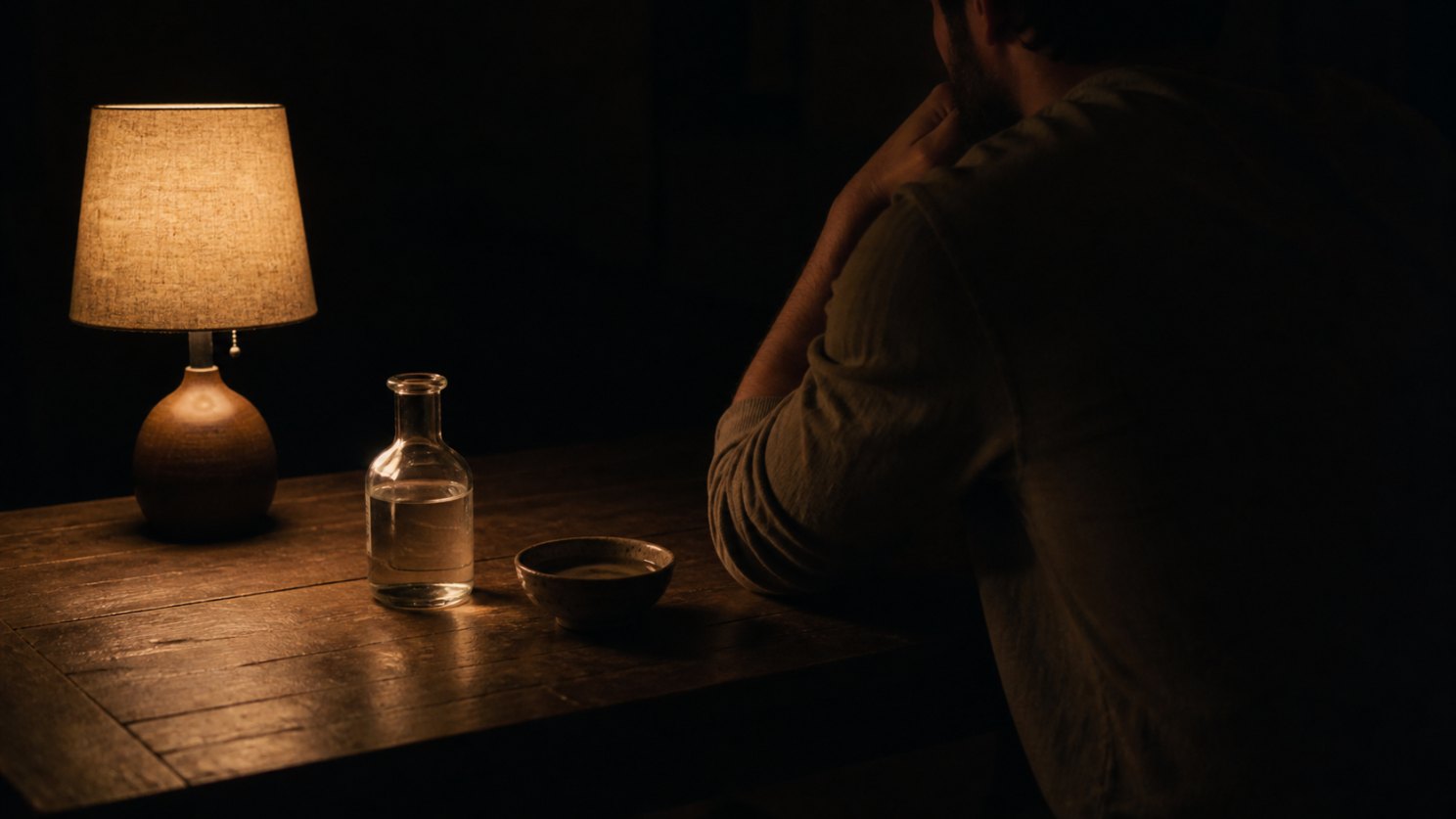
Nothing about the liquid changed. What changed was everything around it, and everything inside the person drinking it.
Drinks culture has a blind spot here. It will tell you what is in the bottle in expert detail; the agave, the altitude, the oven, the years the plant waited. It will not tell you when to open it. The variable that decides most of the experience is treated as nobody's business.

An idea worth borrowing
The language already exists, and it comes from outside spirits. Mid-century researchers kept hitting a result that should have been embarrassing: the same substance, same dose, produced entirely different experiences in different people on different evenings. Norman Zinberg formalized the explanation as a triad; drug, set, and setting.1 Mindset and context were not background conditions. They were ingredients.
Agave spirits have been demonstrating this for four centuries. In Oaxaca, the mezcal at a funeral and the mezcal at a wedding may come from the same bottle and the same hand, and nobody confuses them. What was missing was never the knowledge. It was the willingness to build on it.
The inversion
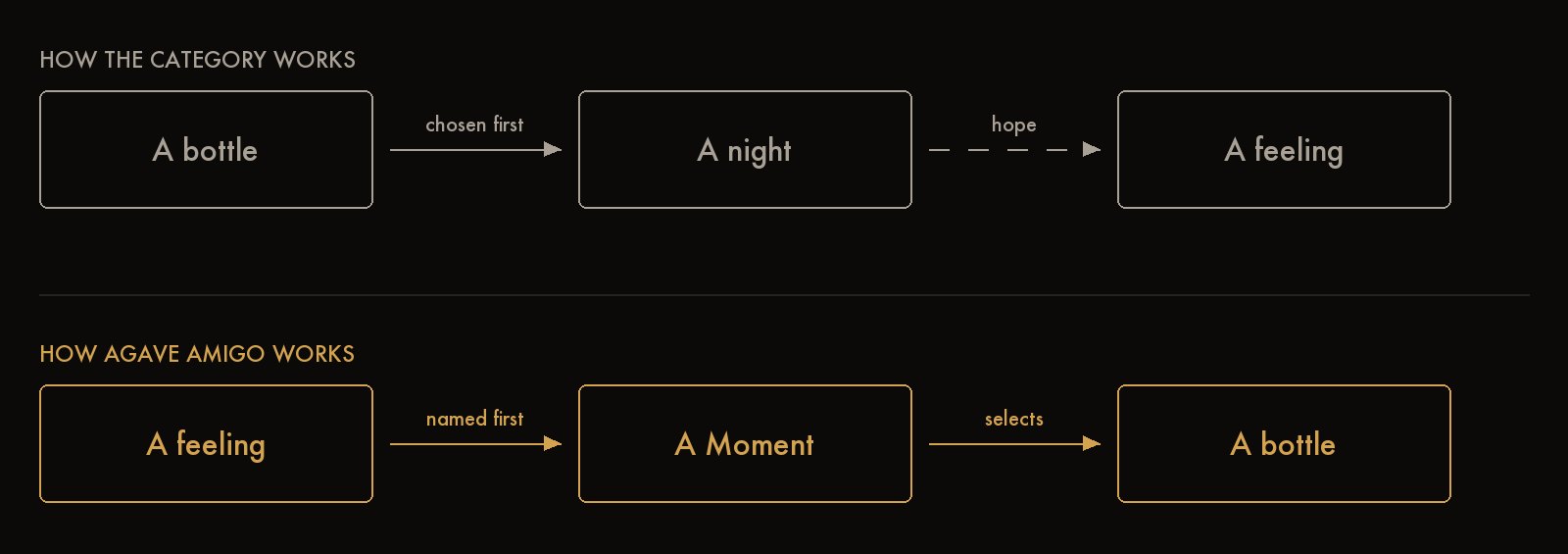
Every recommendation in this category runs the same direction. You start with a bottle — given, read about, spotted on a shelf — then hope it suits the night. The bottle is the premise; the feeling is the outcome, and largely luck.
We run it the other way.
The evidence for it
Consumer sensory science has spent fifteen years measuring the emotions a food or drink evokes rather than how much people liked it. King and Meiselman's EsSense Profile, published in 2010, gave the field a validated list of thirty-nine emotion terms for exactly this purpose.2
Then came the result that matters most to us. In a 2014 study, evoked emotions predicted actual food choice better than liking scores did.3 Ask how much someone liked something and you learn one number. Ask what it made them feel and you learn what they will reach for next.
If feeling predicts choice better than liking does, a recommendation engine that only knows what you liked is answering the wrong question — and you would benefit from a benchmark of how your friends experienced it.
How six Moments came to be
We began with two lists. One was settings; alone, with people who matter, out and going somewhere. The other was mindsets; ritual, wild (salvaje), crystal, layered (capas).
Both were honest. Both were useless separately.
Nobody arrives at a bar having independently selected a room and a temperament, like fields in a form. A person is not in a setting and also in a mindset. They are in one thing containing both, and they can usually name it in three words. Just Me is not a room. It is a room and a disposition arriving together, already fused.
So we stopped asking two questions and combined them. Six came out.
- Just Me — The night is yours
- Good Company — With those worth toasting
- Let's Go — Today is when
- Surprise Me — Born ready
- New to This — We all start somewhere
- Intentional — You know it
Which one are you in now? Choose the Moment →
Six is small for something as various as human evenings, and the smallness is the point; a taxonomy that captures everything predicts nothing. We did not narrow a long list. We stopped asking two questions that were secretly one.
What we do not know yet
The six Moments came from interviews, from years in front of and behind bars, and from the judgement of people who make these spirits. They have not been validated against a large sample, and each Moment's prediction is a considered estimate, not a measured coefficient.
There is a clear path to fixing that. In 2014, Bhumiratana, Adhikari and Chambers built a validated emotion lexicon for coffee drinking; forty-four terms, seventeen borrowed from EsSense.4 Nobody has done that work for agave. We intend to, and every time someone names a Moment and tells us afterwards how the pour actually felt, the dataset that will test these claims gets larger.
We would rather publish the model now and be corrected by evidence later than call it settled before it has earned that.
Not what should I drink, but how do I want this to feel.
Choose one of the 6 Moments and find Your Pour.
Find Your Pour →References
- Zinberg, N. E. (1984). Drug, Set, and Setting: The Basis for Controlled Intoxicant Use. Yale University Press.
- King, S. C., & Meiselman, H. L. (2010). Development of a method to measure consumer emotions associated with foods. Food Quality and Preference, 21(2), 168–177.
- Dalenberg, J. R., et al. (2014). Evoked emotions predict food choice. PLOS ONE, 9(12), e115388. doi.org/10.1371/journal.pone.0115388
- Bhumiratana, N., Adhikari, K., & Chambers, E. IV (2014). The development of an emotion lexicon for the coffee drinking experience. Food Research International, 61, 83–92.
A note on language. Proper nouns — spirits, agave varietals, brands, and the people who make them — keep their names in every language.