
Two flights, one table
Last weekend my wife and I went out and each ordered a flight. I chose tequila. She chose mezcal.
Small pours, side by side. We tasted one, then the other, between bites. She’d hand me hers, I’d hand her mine. Does yours feel ceremonial? Mine is fresh, like citrus. That one is smoke, then sweet. We disagreed about half, but who doesn’t, right? We both enjoyed every second of it.
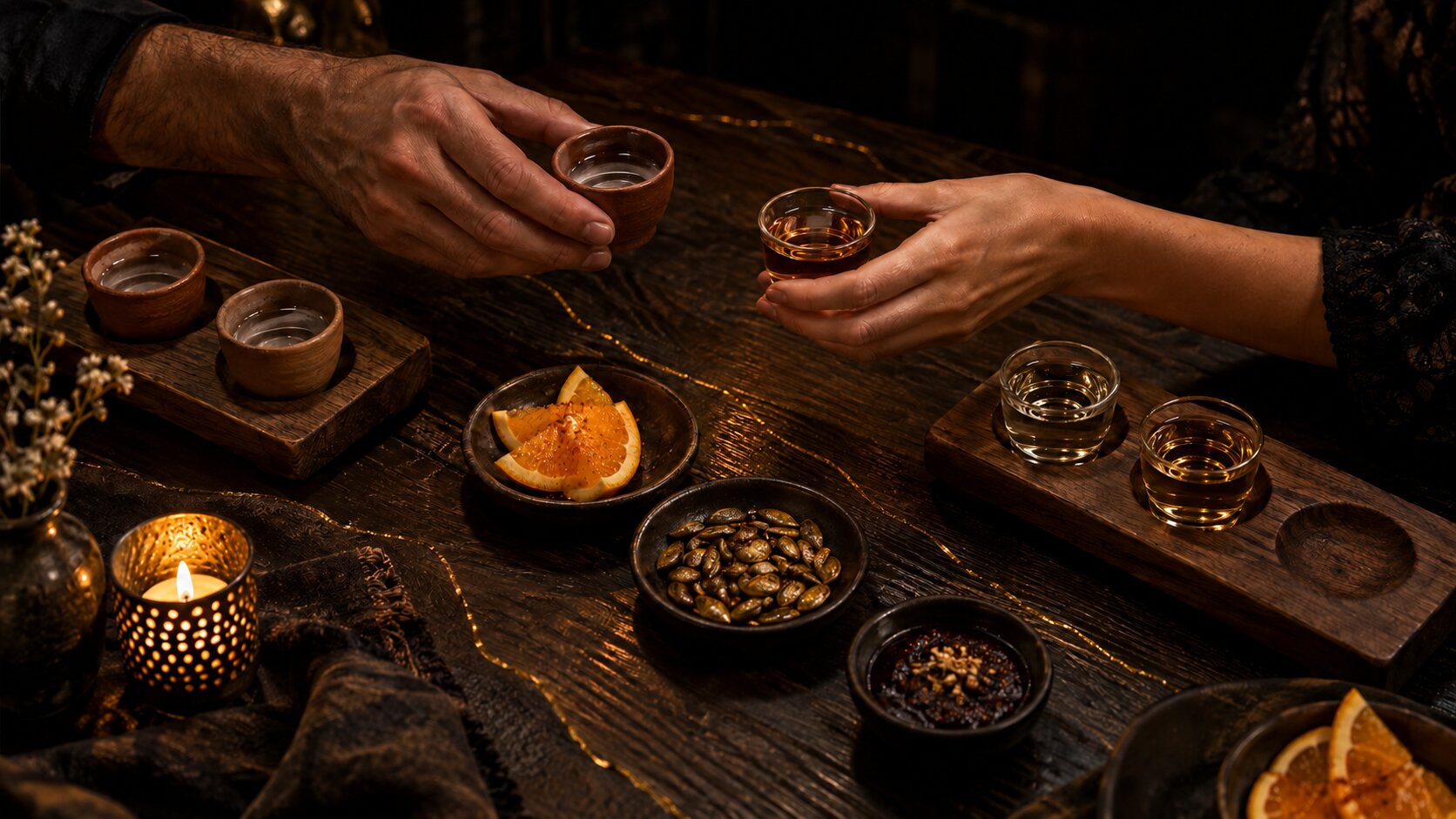
It was romantic. It was bonding. And the drinks weren’t what made it so. The conversation was. Tell me why you love one more than the other and you will have me listening for hours. Two people paying attention to the same thing and telling each other what they found.
People who sip have opinions
This is the part of the category I love most.
People who sip an agave or sotol spirit tend to be aware of how it feels. Not just what it tastes like. How it feels. Ask someone why they love a tobalá, or why they always go back to the same reposado, and you’ll hear feelings.
Meeting people who like to taste different ones is already a gift. You learn something every time, about the spirit and about them, about their open mind.
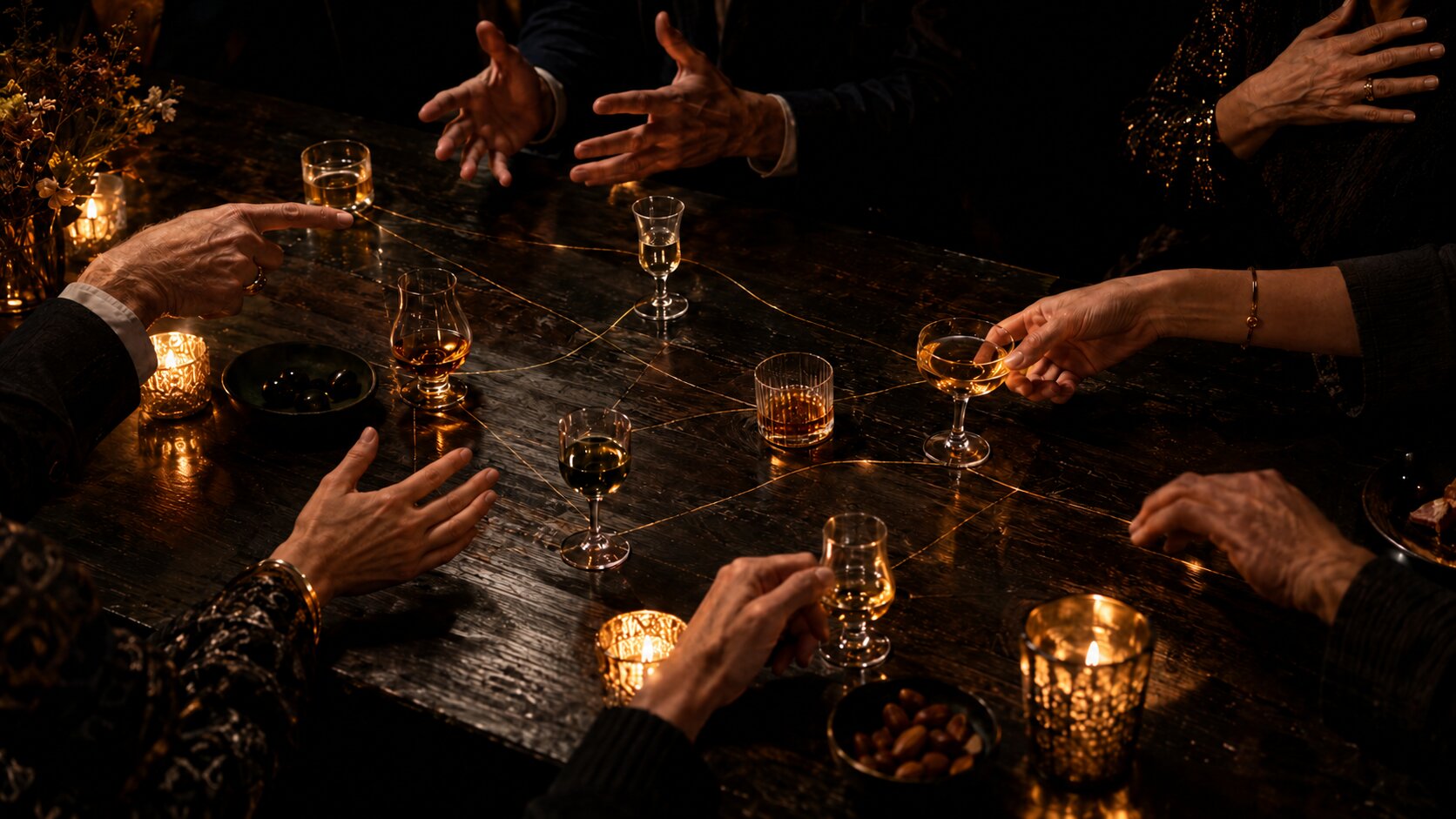
And I’ve watched it happen more times than I can count: a get-together goes from pleasant to a “memorable moment” of people sharing in no time.
There’s a reason it works
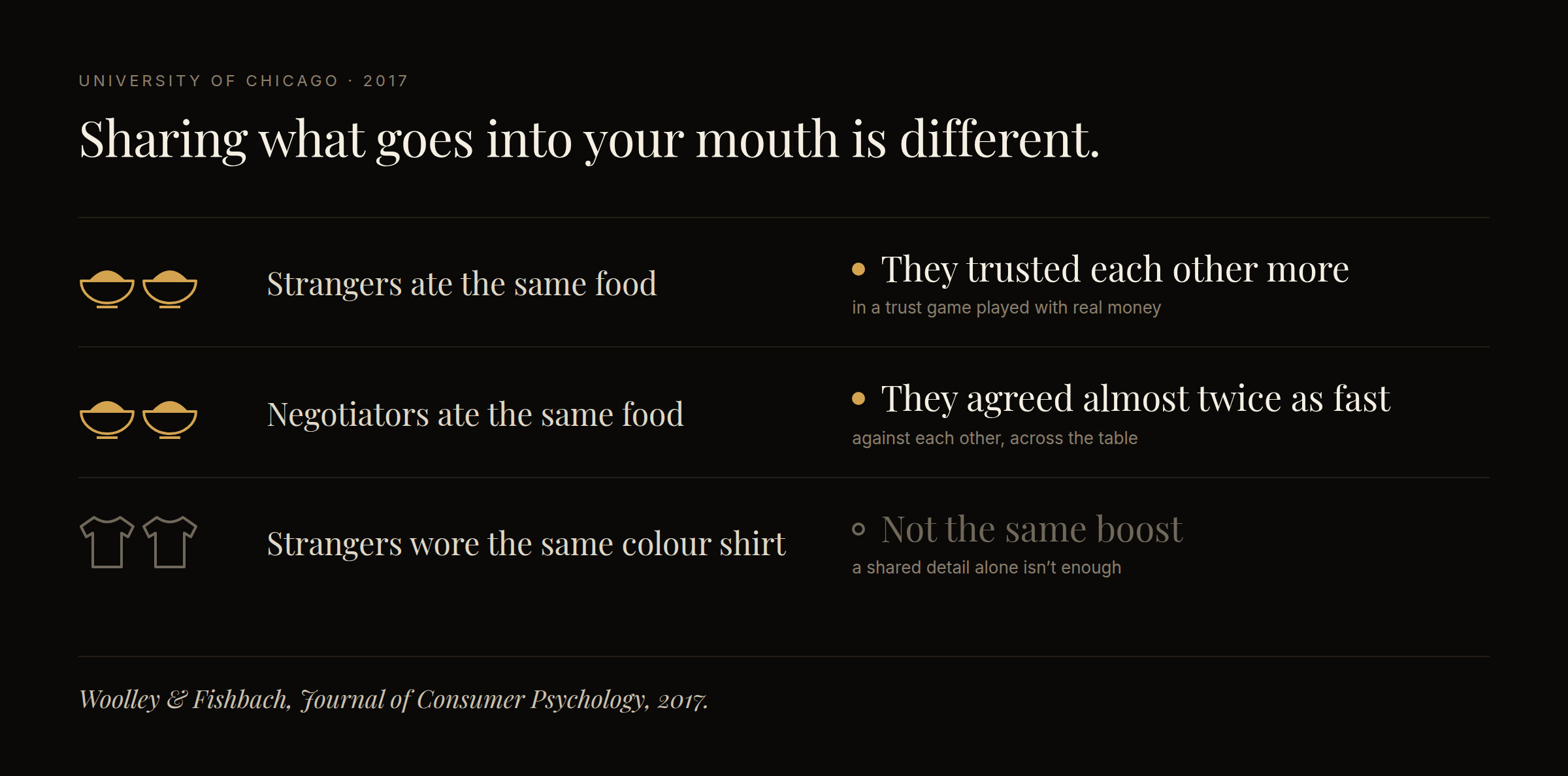
Researchers at the University of Chicago paired up strangers and gave them something to eat. Some pairs got the same food, some got different food. Then they played a trust game with real money. The strangers who had eaten the same thing trusted each other more. In a second study, pairs negotiating against each other reached an agreement almost twice as fast when they’d eaten alike.
The same researchers checked whether any shared detail would do. Pairs wearing the same colour shirt didn’t get the same boost. Sharing what goes into your mouth is different. We trust what we taste, so we trust the people who taste it with us.
There’s a second finding I think about. Psychologists who study couples have shown that doing something new together, side by side, makes partners feel closer than doing something familiar. A flight you’ve never tried is exactly that. New, shared, and worth talking about.
So we built a way to see it
Open any member’s profile in Agave Amigo and you’ll see a heading: How similar you are. Under it, a number.
That number compares what the two of you share:
- Your Agave Crest: the plant, the colour, and the two words that describe how you like your pour, built from the Memories you rated five stars.
- Your Top 5 and the bottles in your Vault.
- The Experts, venues and people you both follow.
- The badges you’ve earned and the city you live in.
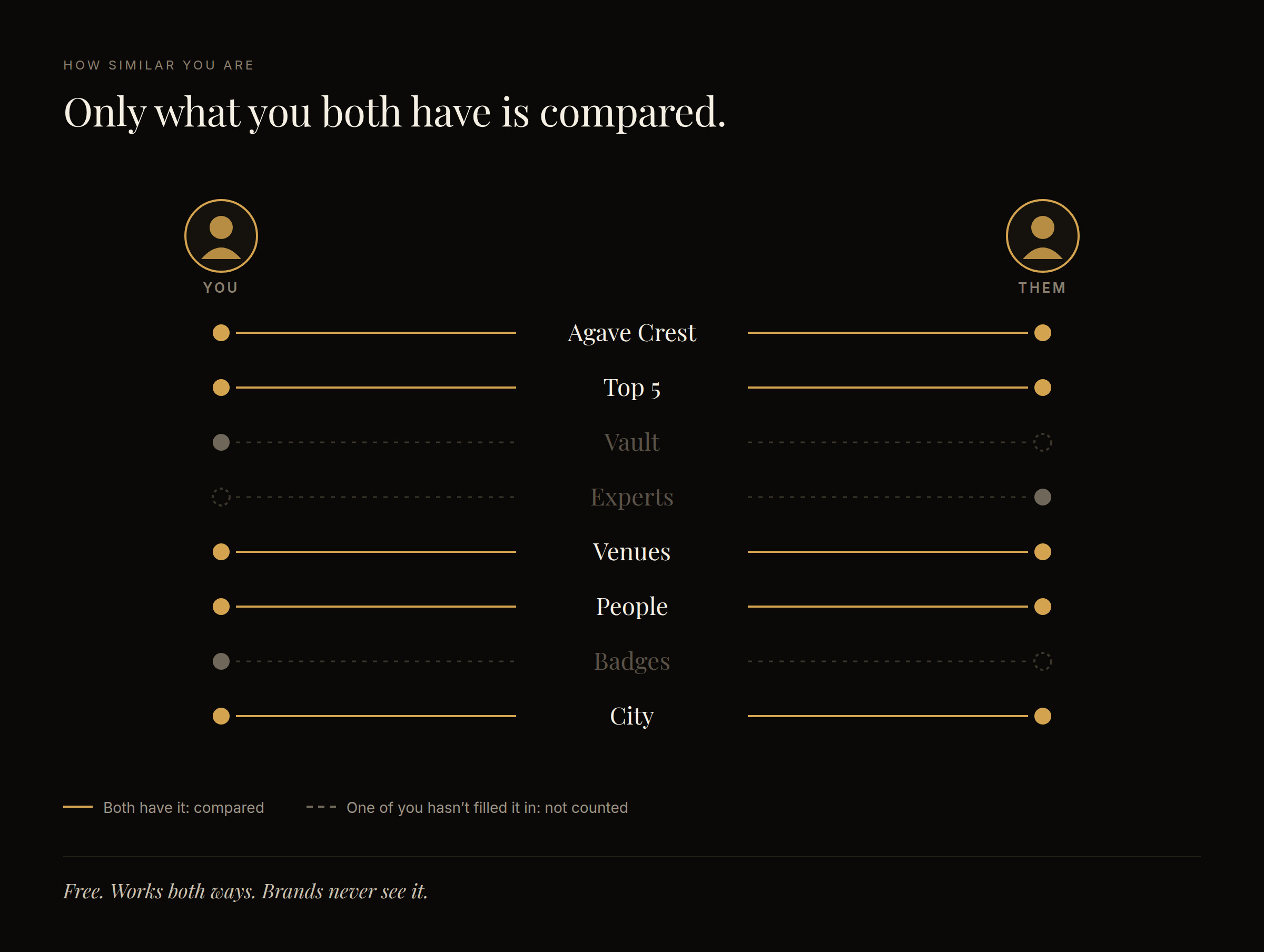
It only compares what you both have. Something one of you hasn’t filled in is never counted as a difference. It’s free, it works in both directions, and brands never see it.
It isn’t a verdict. It’s a reason to start talking. When the tiles show you share a plant, or a colour, or the same way of describing a pour, you already have your first question: what did you love about it?
How to make your number mean something
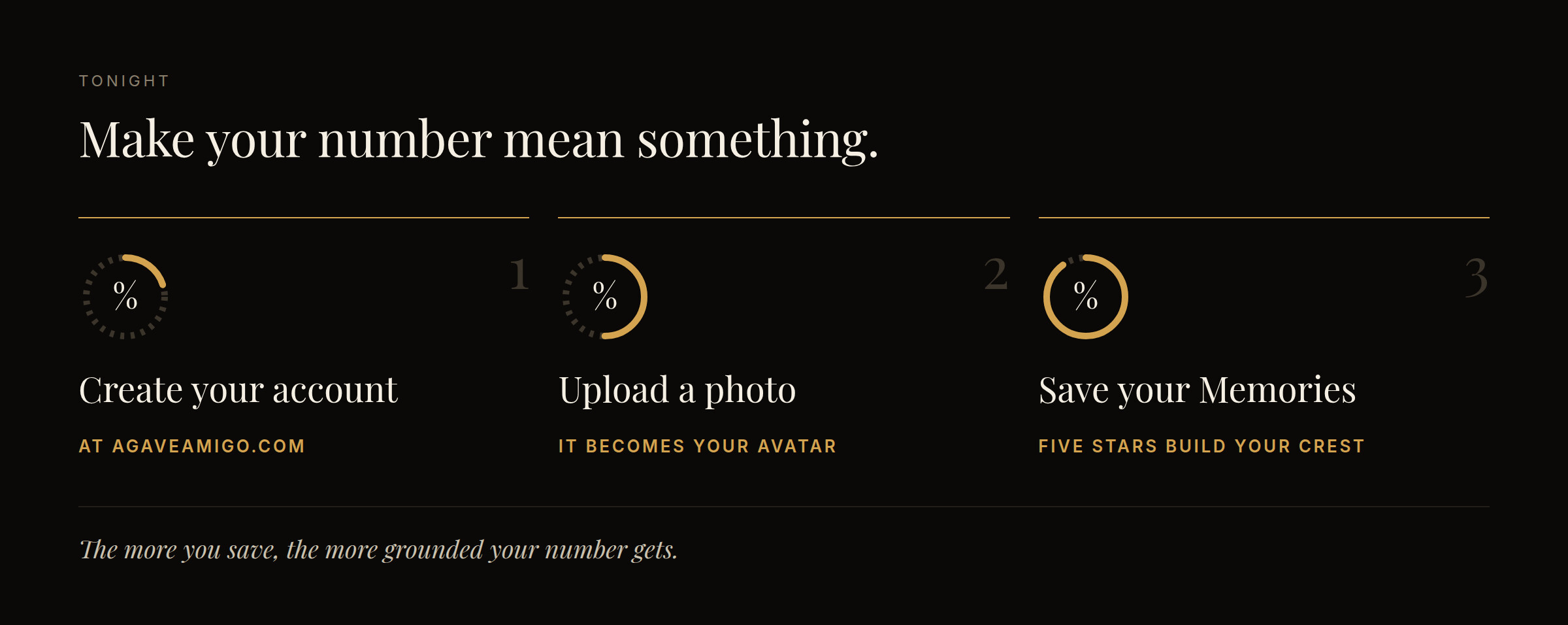
The number is only as good as what you give it. So here’s what I’d ask you to do tonight:
- Create your account at agaveamigo.com.
- Upload a photo. It becomes your avatar, and it’s how people will recognise you at the table.
- Save your Memories. Every tequila, mezcal, sotol, bacanora or raicilla you loved: what it was, where you were, how it felt. The ones you rate five stars build your Crest.
The more you save, the more grounded your number gets, and the more honest it is about who you really have in common.
Then pour two
Ten articles ago, this library started with a simple idea: a spirit is easier to choose, and easier to love, once you can put words to it.
It ends here, at a table, with two glasses and two people comparing notes.

Order two different ones. Hand yours across. Ask how it feels.
You might find your people. You might find out you already won.
References
Woolley, K. & Fishbach, A. (2017). A recipe for friendship: Similar food consumption promotes trust and cooperation. Journal of Consumer Psychology 27(1), 1–10. Aron, A., Norman, C. C., Aron, E. N., McKenna, C. & Heyman, R. E. (2000). Couples’ shared participation in novel and arousing activities and experienced relationship quality. Journal of Personality and Social Psychology 78(2), 273–284.