The Tasting Ritual
Senses & Ritual · Article 7 of 11
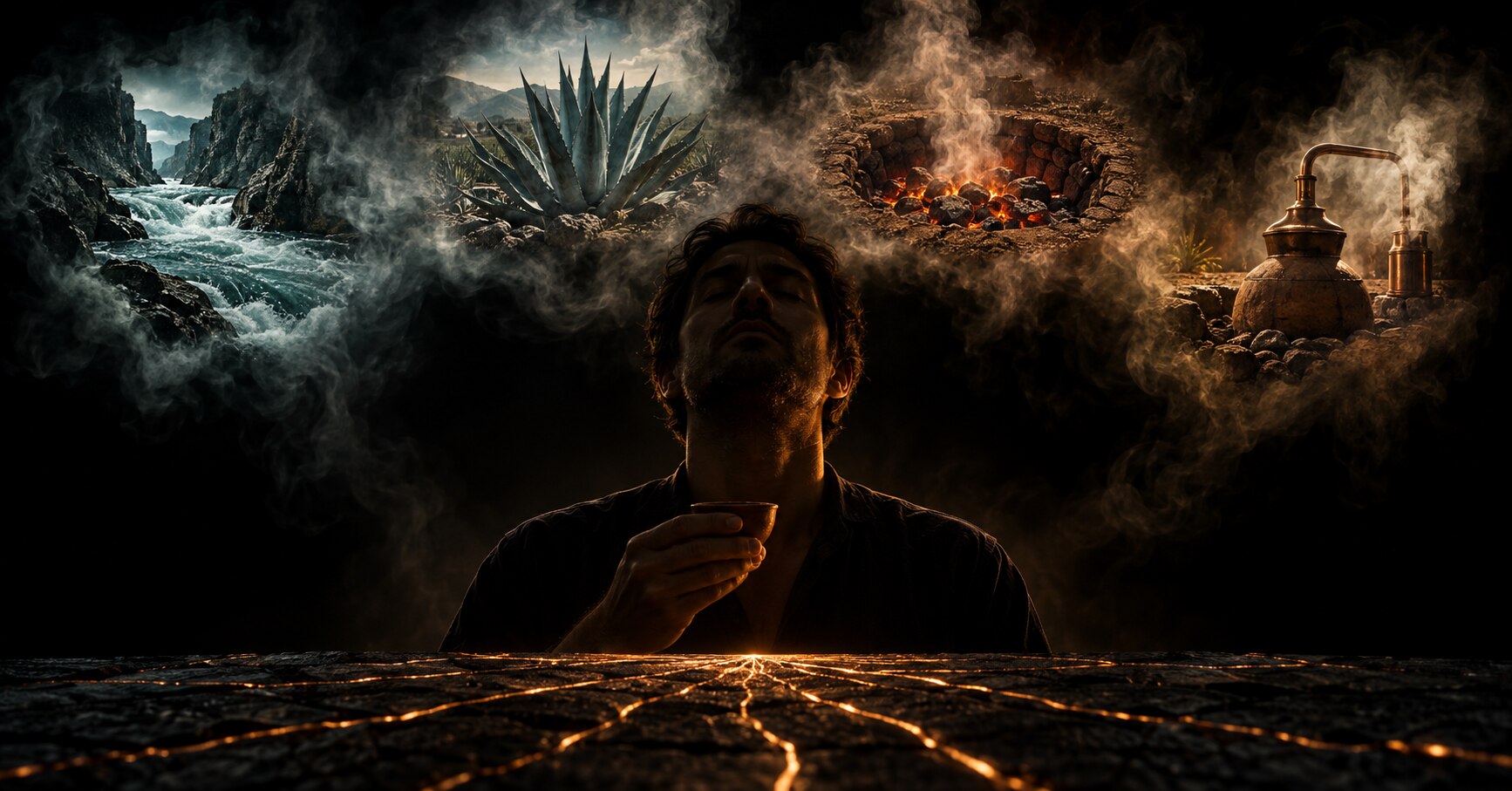
Seven years underground, a fire, a still, and about two seconds of your attention. This is how I close that gap, one sense at a time, and there is a toast in the middle of it.
The plant was not allowed to flower
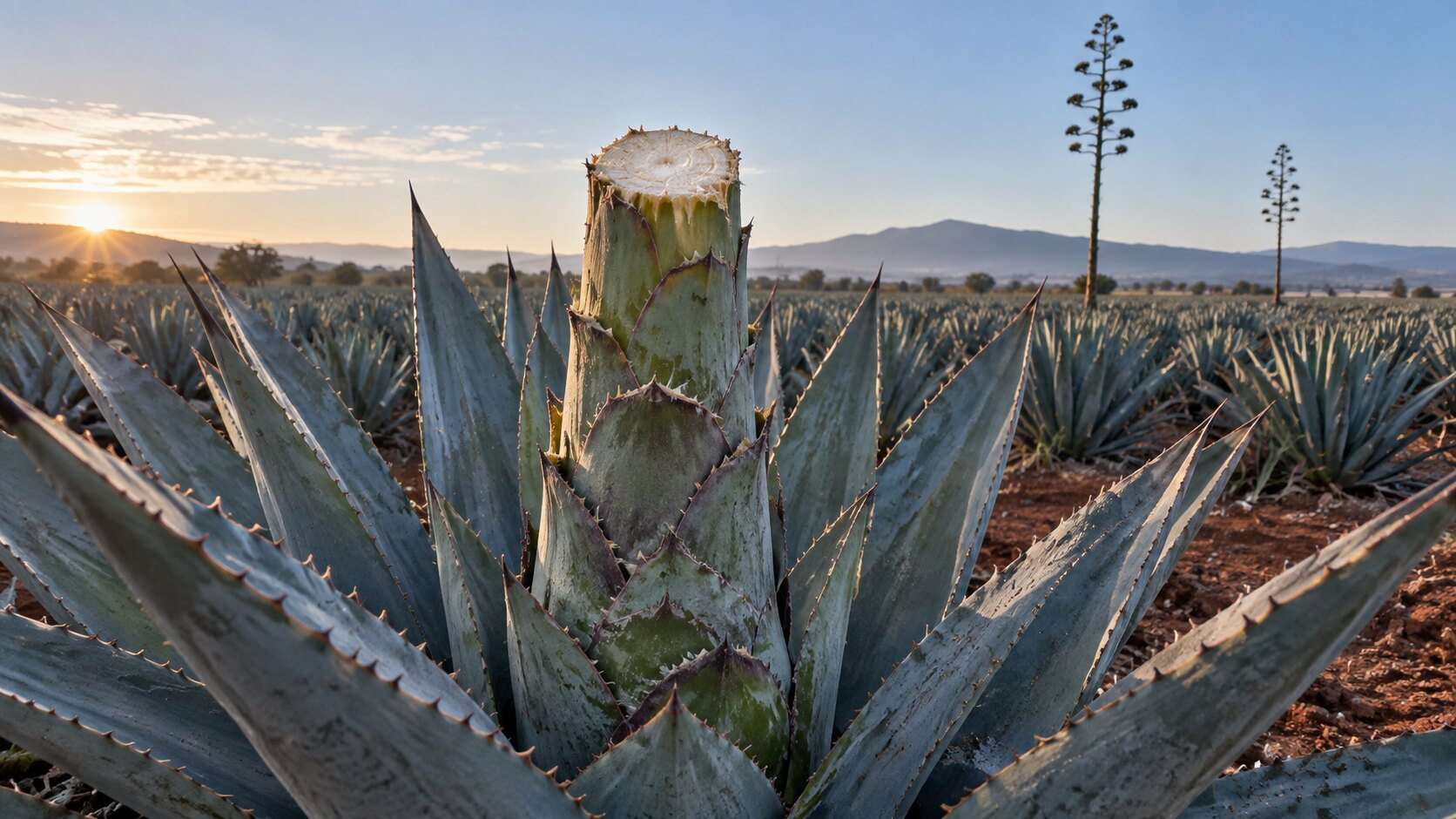
An agave gets one bloom. It spends years pulling sugar into its heart, sends up a quiote that can reach six meters, flowers once, and dies. That is the whole plan.
We interrupt it. The quiote gets cut so the sugar stays in the piña, which means the plant in your glass is one that was never allowed to finish. Its bloom was taken from it.
It happens in the glass instead. That is not a metaphor I am reaching for. That is the trade.
Before that, there is the mother. Blue agave is propagated from hijuelos, the offshoots a plant pushes out as it nears the end, and those offshoots are clones. She does not pass information down. She passes herself. The plant in the field is genetically the same plant as the one before it, and the one before that, for generations, which is beautiful and also the reason people worry about how narrow tequila's gene pool has become.
Many wild agaves do the other thing. They flower, they cross, their daughters are not them. That is a large part of why mezcal surprises you and tequila rarely does.
Sotol plays by different rules and the sotoleros know it. Dasylirion is polycarpic. It flowers, it lives, and it flowers again, as many times as it gets. It is also dioecious, male plants and female plants, which agave is not. A sotolero is not working with something that spent its whole life saving up for one death. Same desert, different deal, and we are not going to write as though they are the same plant.
Either way, the years are real. Six, eight, twelve, twenty five depending on the species, spent doing almost nothing visible, in dirt, in the sun, making sugar.
Some of it arrives intact
Here is what actually reaches you.
The terpenes are the plant's own. Linalool, alpha-terpineol, and they differ by species, which is why an espadín and a tobalá are not two versions of one thing. Those molecules were made underground over years and they survive the fire and the still.
The rest is built. The furans come from the Maillard reaction in the oven, the same browning that happens to bread. The esters and the higher alcohols come from the ferment. The maestro does not release what was already there. He makes most of it, on top of what the plant brought.
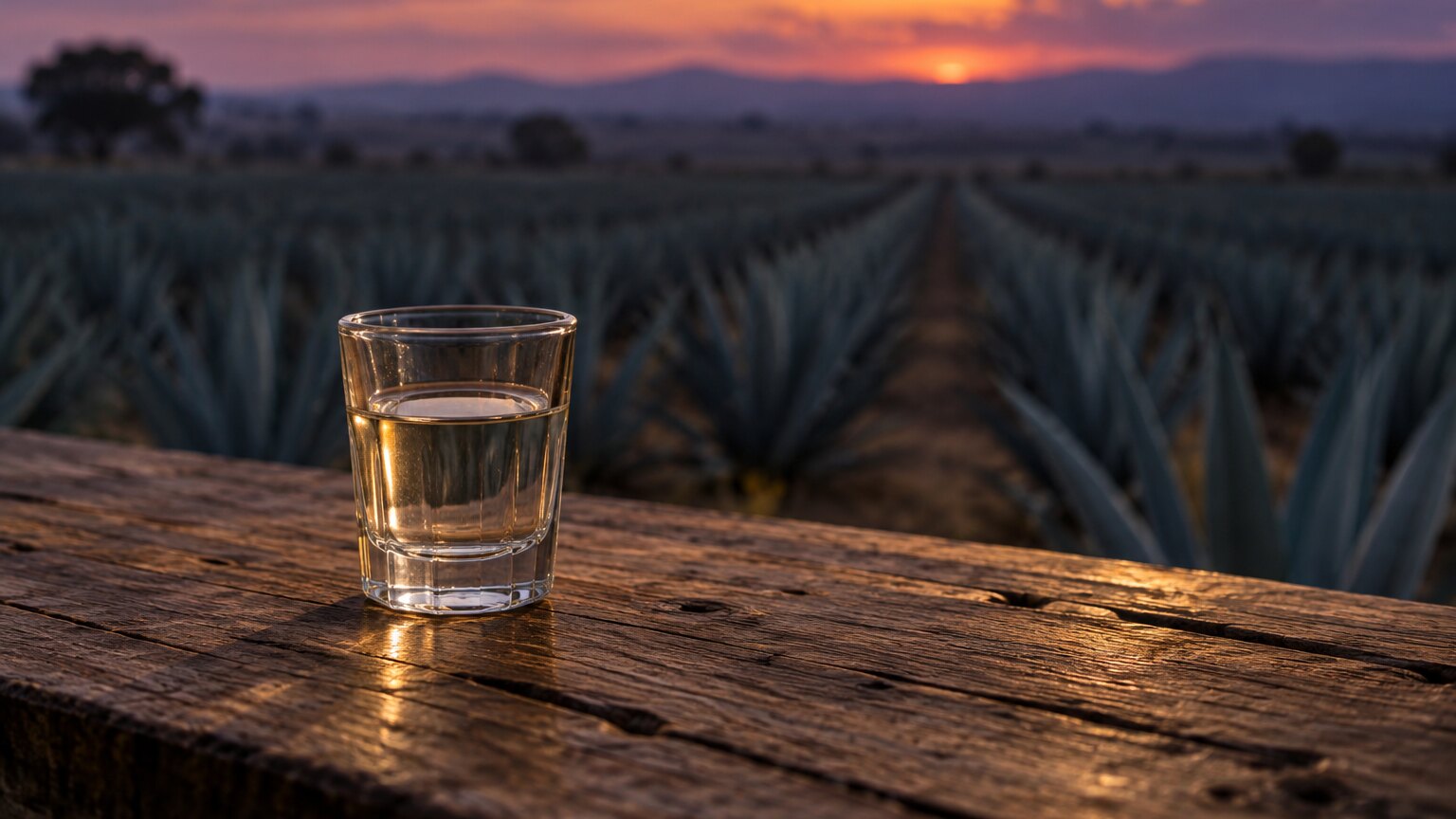
So the drop in front of you is a collaboration between something that took a decade to grow and somebody who took a week to transform it, and neither one is the whole story.
It is worth two seconds of attention before you drink it. That is all this article is asking.
The ritual starts before the bottle is open
A ritual is not the moment. It is everything arranged around the moment.
Yours started when you knew you were going to have this. On the way there, choosing which one, reaching for the glass. That is not preamble, that is the first half, and the reason I am telling you is that the second half goes better when the first half happened.
First you look
Hold it up and you learn one thing honestly: whether it sat in wood.
Clear means it did not, or barely. Straw, gold, amber means it did, or means somebody put color in it, which is legal nearly everywhere and almost never on the label. Color tells you about time in oak and nothing at all about quality.
Tilt it and watch what runs back down the side. Slow legs mean more alcohol and more sugar, not more care.
That is the entire visual course. It is a short one.
Then you smell, and not the way you are about to
Do not put your nose in the glass.
Every volatile has two separate thresholds. One is where you smell it. The other, much higher, is where it stops being a smell and starts being pain, because the trigeminal nerve takes over from the olfactory one. Cometto-Muñiz and Cain measured both, decades ago.
Bury your nose in forty five percent alcohol and you cross the second threshold. You are not smelling harder. You have switched off the sense you were trying to use, and everything after that reads as heat.
So hold it low, off to one side, mouth slightly open, and come to it. Smoke if there is smoke. Cut grass, wet stone, green pepper, cooked fruit. You are not looking for the right answer. There is not one.
Then you make the only sound the drink will make
Now look up and find whoever is with you.
Nobody knows why we clink. The story everybody tells is that it splashed your drink into mine to prove neither was poisoned, and that story has no evidence behind it and does not survive thirty seconds of thinking about the physics. The origin is genuinely unknown.
What is documented is smaller and better. The word toast comes from the bread. Spiced or charred bread, dropped into the cup, partly to make bad wine drinkable. Falstaff calls for it in The Merry Wives of Windsor: go fetch me a quart of sack; put a toast in't. The drinking sense of the word does not appear until the late 1600s.
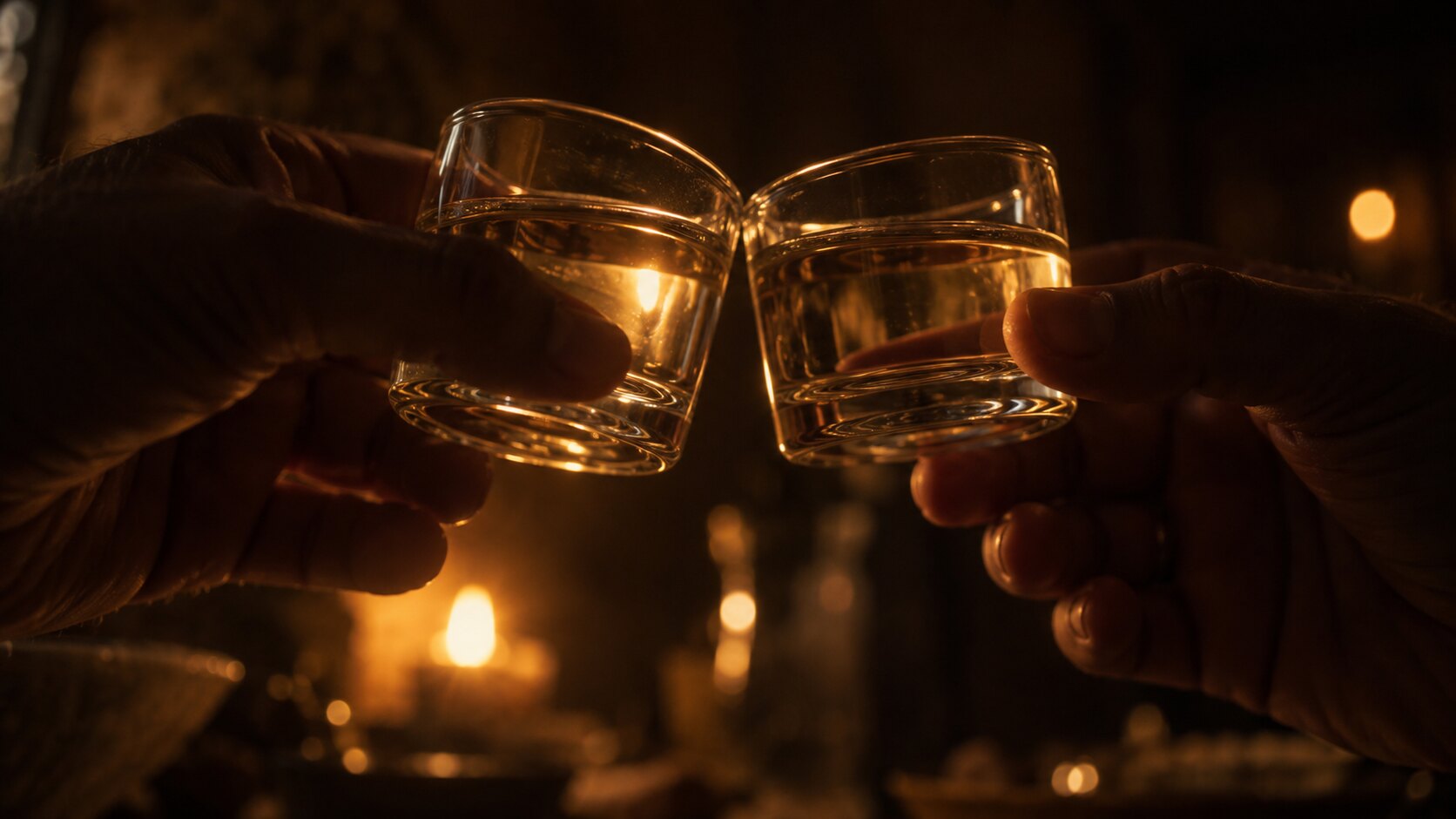
And there is one theory I keep whether or not it is true, because it is right regardless. A drink reaches your eyes, your nose, your tongue, your hands. The clink is the only part of it you will ever hear.
So do it on purpose. It is the sound of the thing starting.
The first sip is a kiss
El mezcal no se toma, se besa. You do not drink it, you kiss it.
Take very little. Let it sit on the front of the tongue and go no further. This one is not for judging, and anything you conclude from it will be wrong, because you are tasting the arrival and not the spirit. Everything is loud on an unprepared mouth.
What it does is tell the rest of your mouth what is coming.
The second sip is the map
A little more. Move it around. Let it touch the sides, the roof, under the tongue.
Your mouth adapts fast, and by the end of this one most of the shock is spent. The heat settles into whatever it actually is rather than whatever it was at first contact. Some of what read as fire turns out to have been surprise.
You are still not judging. You are building the surface the third sip gets to land on.
The third sip is the one you came for
Now the mouth is ready, and here is the thing worth knowing.
Smelling a spirit and tasting it are not one sense used twice. Small and colleagues put people in a scanner and found that the same molecule produces a different pattern of brain activity depending on whether it arrives through your nostrils or comes up the back of your throat from inside your mouth. Two routes, two responses, one molecule.
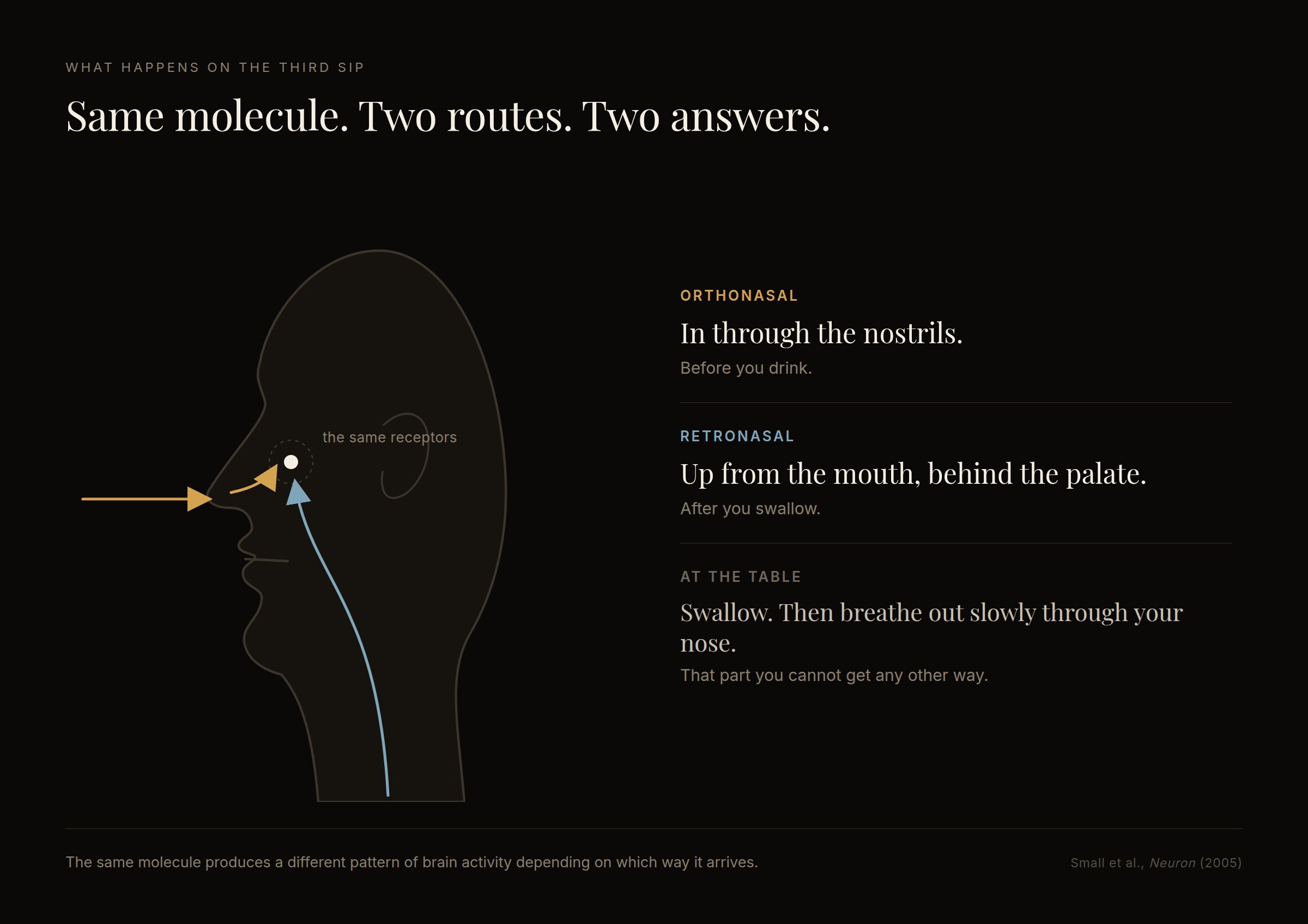
Which means the third sip has a part you cannot get any other way. Swallow, then breathe out slowly through your nose, and pay attention to what shows up on the way out. It will not match what you smelled before you drank. That gap is not a mistake. That is the whole reason this is worth doing slowly.
Close your eyes and name the color
One more thing, and it is the part people think is woo until they try it.
Close your eyes for a second. See what color turns up.
Something will. Wiesmann and colleagues scanned people lying in darkness with nothing to smell and nothing to taste, just opening and closing their eyes, and found that eye closure alone activates the piriform cortex, which is where smell is handled, and the gustatory area in the frontal operculum. Shut your eyes and the parts of your brain that deal with flavor come on by themselves.
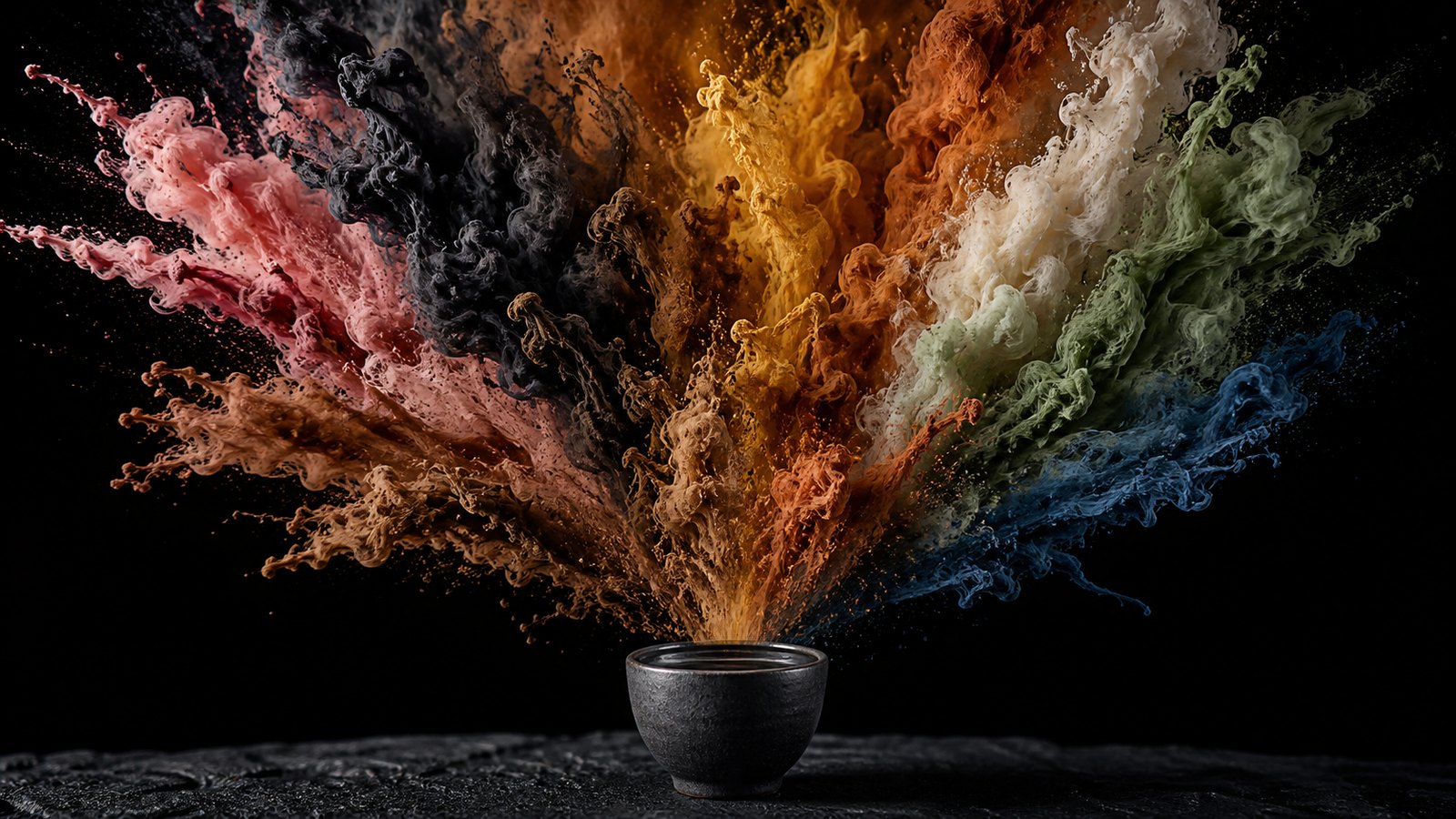
And the color is not random. Levitan and colleagues tested a hundred and twenty two people across six cultural groups with fourteen odors and found the color-to-smell matches were strikingly consistent inside each group and clearly different between them.
Which means the code is real and it is yours. Not a universal key, a personal one, assembled out of everything you have ever eaten and everywhere you have been. A Dutch nose and a Malay nose do not agree, and both are right.
That color is the shortest honest answer you have to what this spirit is doing to you. It is faster than a sentence and more accurate than a tasting note, and it is why we ask for a color instead of a paragraph.
Then write it down, because you will forget
Log in at agaveamigo.com and put it in your journal. The color, the moment, where you were. For the sequence behind salt, spirit, and lime, continue with Salt and Lime.
Not for us. For you in eight months, standing in front of a shelf, trying to remember which one it was that did the thing.
The plant took seven years. You can spare thirty seconds.
· · ·
References
- Cometto-Muñiz, J. E., & Cain, W. S. (1990). Thresholds for odor and nasal pungency. Physiology & Behavior, 48(5), 719–725.
- Small, D. M., Gerber, J. C., Mak, Y. E., & Hummel, T. (2005). Differential neural responses evoked by orthonasal versus retronasal odorant perception in humans. Neuron, 47(4), 593–605.
- Wiesmann, M., et al. (2006). Eye closure in darkness animates olfactory and gustatory cortical areas. NeuroImage, 32(1), 293–300.
- Levitan, C. A., et al. (2014). Cross-cultural color-odor associations. PLOS ONE, 9(7), e101651.
- Vera-Guzmán, A. M., et al. (2018). Volatile compounds in mezcal spirits. Beverages, 4(1), 9.
- Shakespeare, W. The Merry Wives of Windsor, III.v.
- Where Does ‘Toast’ Come From? Merriam-Webster. merriam-webster.com
- Hernández-Quintero, J. D., et al. (2015). Study of the mitotic and meiotic chromosomes of sotol (Dasylirion cedrosanum Trel.). Phyton, 84, 107–112.
Choose your Moment and discover Your Pour.
Find Your Pour →A note on language. Proper nouns keep their names in every language: spirits, agave varietals, brands, and the people who make them.