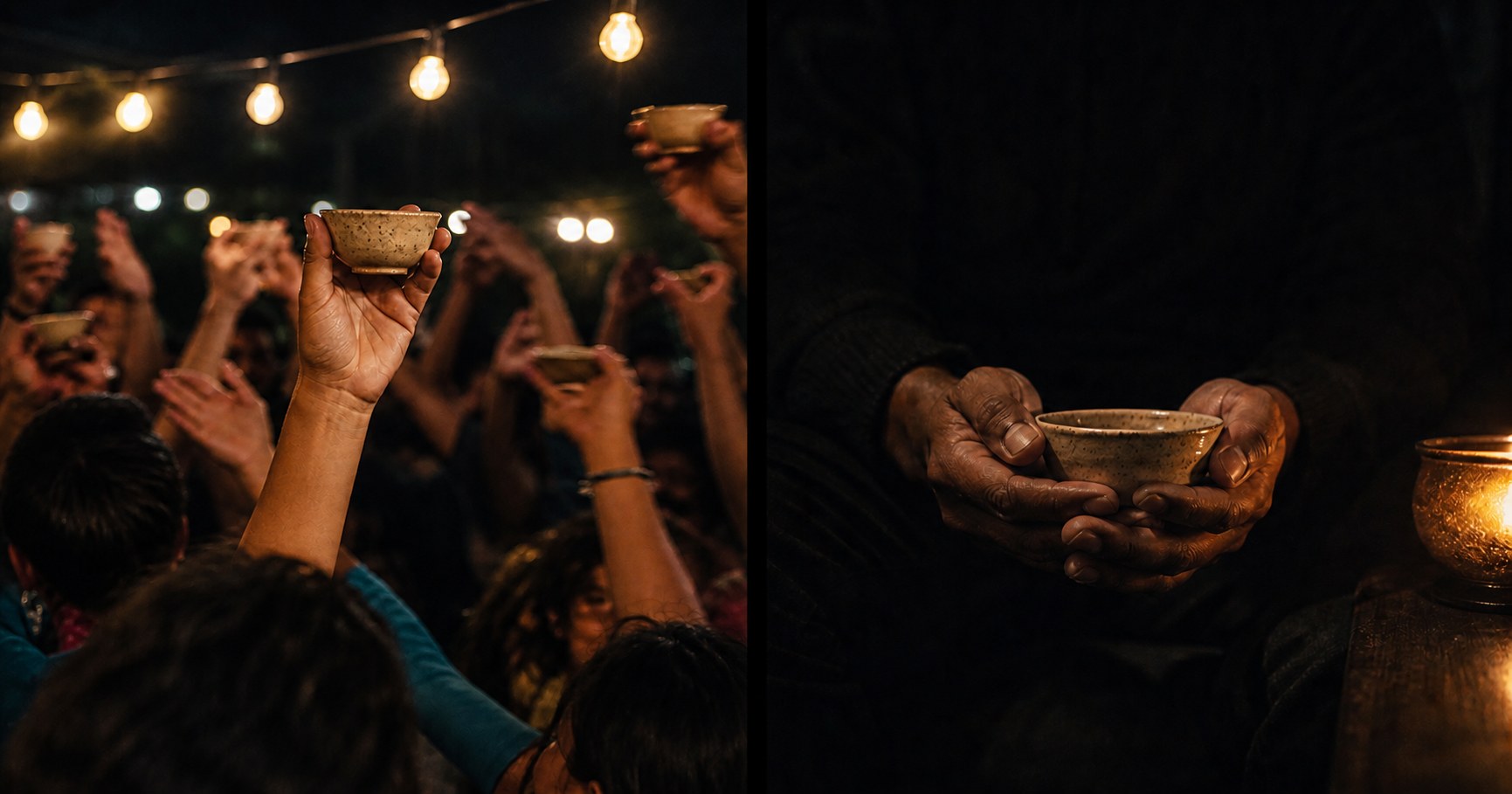
Some Nights You Stand Up. Some Nights You Sit Down.
The Model Behind the Pour · Article 4 of 11
Some spirits boost your high. Some ground your down. Neither is the better night, and the difference between them is not strength. It is how much of your attention the pour asks for.
There is a pour that gets you out of your chair, and there is a pour that puts you in one.
You already know both. The bottle that lands on a table and makes the table louder. The bottle someone opens at the end of a night, when three people are left and nobody wants to be the first to leave.
Same category. Often the same bottle.
We spent a long time trying to name what separates them, and every word we tried failed in the same way. Strong and smooth describe the liquid. Refined and simple rank it. Sophisticated insults everyone it leaves out.
The honest answer turned out not to be about the spirit at all. It is about where your attention goes while you drink it.
A pour that helps you stand up scatters your attention outward, across the room and into other people. A pour that helps you sit down collects it, pulls it inward, and puts all of it on the glass in your hand.
One line, ten steps. We call it Party-Magic.
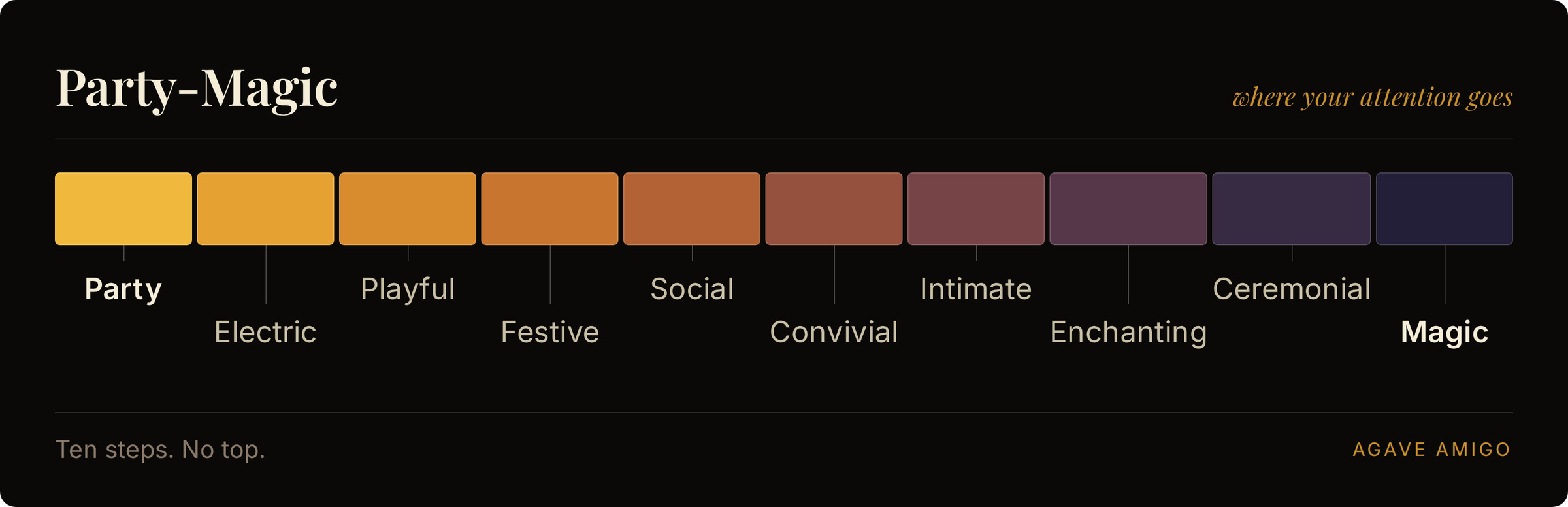
The numbers are ours. The words are yours.
There are ten positions on that line and every one of them is numbered, and you will never see a number.
That is deliberate, and there is research behind it.
Show a person a scale from one to ten and they read it as a grade. Not because anyone told them to. Because they cannot help it. A research team put the same question to 1,400 people across Singapore and the Philippines, asking how popular fried chicken is. On a scale where ten meant most popular, 84 and 96 percent rated it high. Then they flipped the scale so ten meant least popular, and asked again. The high ratings fell to 43 and 54 percent.1
Nothing about fried chicken had changed. The respondents understood the instructions perfectly well. Their hands went to the big number anyway.
It runs deeper than direction. Norbert Schwarz and colleagues gave people the same question with the same words at both ends, changing only the digits printed underneath: zero to ten in one version, minus five to plus five in the other. On the zero-to-ten scale, 40 percent of people placed themselves below the midpoint. On the minus-five-to-plus-five scale, 29 percent did.2
Same words. The numbers changed what the words meant.
So we kept the coordinates and gave you the vocabulary. Inside the engine your night is a position on a line, because a recommendation is arithmetic and arithmetic needs a number to work with. Outside, you get Festive, or Intimate, or Ceremonial.
The rest of this category will hand you a 94 and ask you politely not to read it as a grade. We would rather not hand you the number.
The pour that belongs to the room
At one end of the line the spirit is not the subject. It is the excuse.
The bottle goes around, somebody tops up somebody else without asking, and the liquid runs underneath a conversation that is actually about something else entirely. Ask anyone there what they drank and you will get a brand, maybe.
That is not a failure of attention. That is attention doing its work somewhere else.
And the work is not trivial. In 2016 a team at Oxford ran what amounts to a controlled party. Ninety-four strangers, in groups of four, headphones on, a silent disco. Some groups heard the same music and the same instructions, and moved together. Others heard the same music but received different instructions, so they moved near each other without moving with each other. A third set heard different music altogether.
Only the synchronized groups showed the effect. Their pain thresholds rose by twelve millimeters of mercury, the standard proxy for endorphin release, and they reported feeling significantly closer to the strangers they had just been dancing beside.3
Being near people did nothing. Being in time with them did everything.
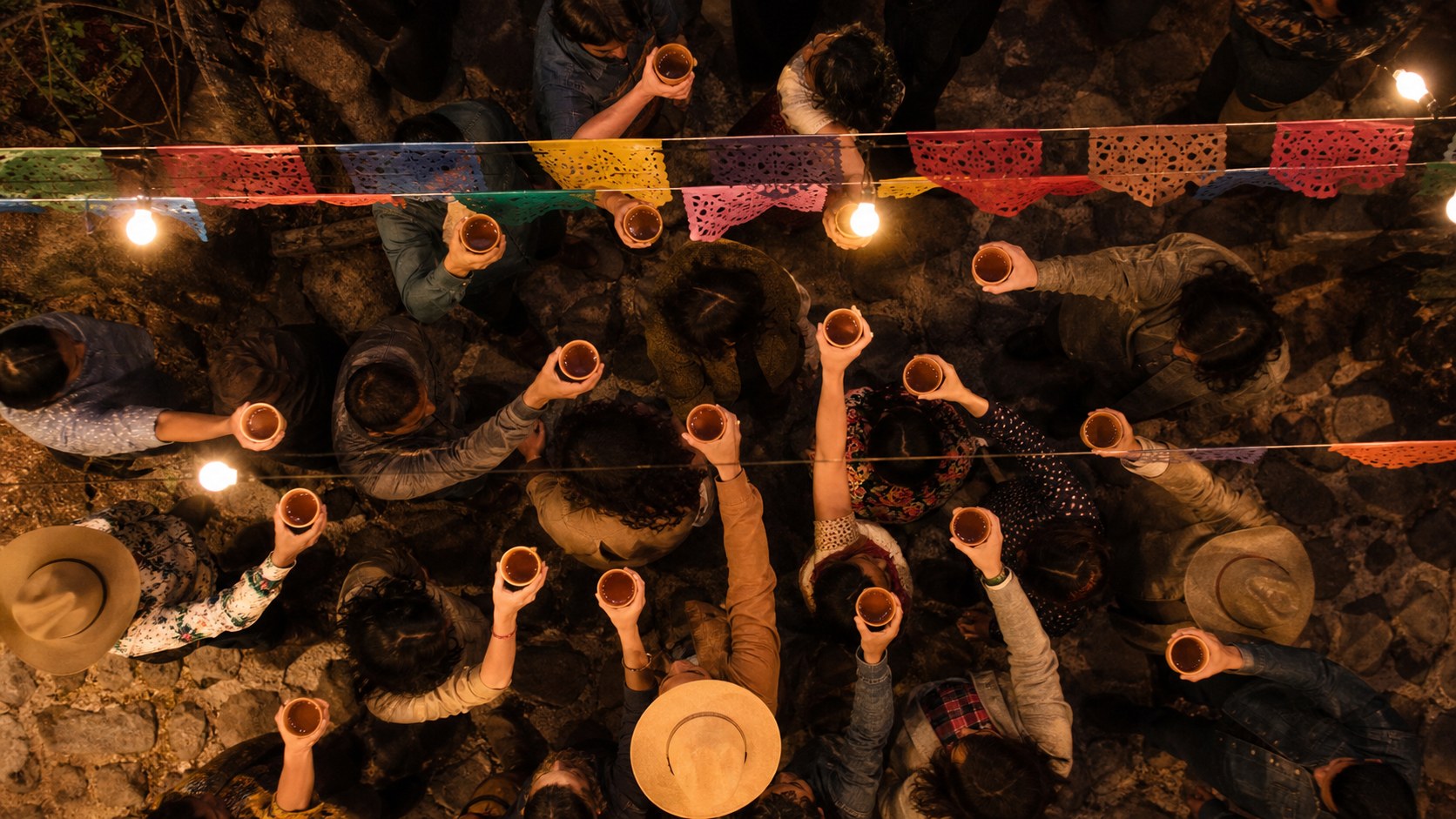
That is what this end of the axis is for. Not noise. Alignment. A room where a number of people are pointed at the same thing at the same moment, and the pour is what got them pointed.
You can dance and toast on the same night because they are the same move at two scales. Dancing is a room in sync for an hour. A toast is a room in sync for four seconds. Both are a lot of attention arriving in the same place at the same time.
One glass, all of you
At the other end, everything reverses. The room recedes and the glass takes everything.
This is the pour somebody serves a small measure of and does not drink immediately. The one held under the nose a while first. The one that stops a person mid-sentence, while the people around them let it happen, because they can see what it is.
The experience gets bigger than the glass. A pour like that does not stay in your mouth. It goes out to a place, or a person, or a year.
Here is what makes that measurable rather than mystical. In 2013 Kathleen Vohs and colleagues had people perform small rituals before eating. Break a chocolate bar in half while still wrapped, unwrap each half separately, then eat. Pour a lemonade and stir it in stages. The people who did it enjoyed the food more, spent longer eating it, and paid more for it than people given the same thing with no ritual.
Then they ran the version that matters. They had people watch somebody else perform the ritual, and then eat. It did not work.4
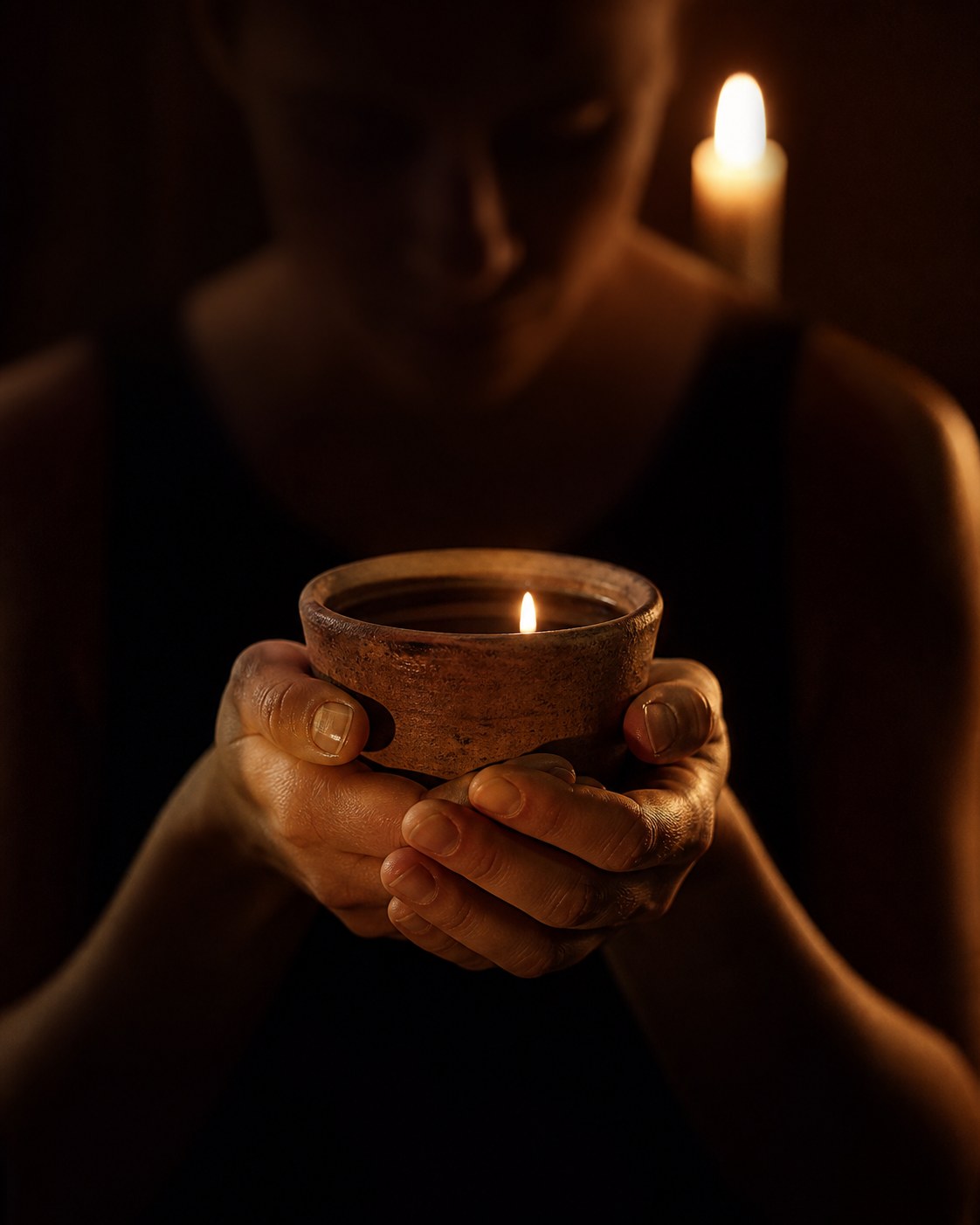
The ritual is not a spell. It is a device for getting your attention onto something, and the attention is the active ingredient.
Most of it is you
We give every spirit in the catalog a position on this line. That position is real, it is not the whole story, and it is not even most of it.
You move. The bottle that was Ceremonial last November, poured on a night that deserved it, is Festive in June on a roof with eight people. The bottle did not change. You did.
So when we ask where you are tonight, we are not asking you to rate anything. There is nothing on this line to be good at.
A night that wants Party is not a night that failed to be Ceremonial. It is a night that wants to be pointed outward, and some spirits do that better than others, and finding one is the entire job.
· · ·
References
- Milieu Insight (2024). Reversing higher-is-better labels in numerical ratings. Survey of 1,400 respondents in Singapore and the Philippines. Industry research, not peer reviewed.
- Schwarz, N., Knäuper, B., Hippler, H.-J., Noelle-Neumann, E., & Clark, L. (1991). Rating scales: numeric values may change the meaning of scale labels. Public Opinion Quarterly, 55(4), 570–582.
- Tarr, B., Launay, J., & Dunbar, R. I. M. (2016). Silent disco: dancing in synchrony leads to elevated pain thresholds and social closeness. Evolution and Human Behavior, 37(5), 343–349.
- Vohs, K. D., Wang, Y., Gino, F., & Norton, M. I. (2013). Rituals enhance consumption. Psychological Science, 24(9), 1714–1721.
Choose your Moment and discover Your Pour.
Find Your Pour →A note on language. Proper nouns keep their names in every language: spirits, agave varietals, brands, and the people who make them.