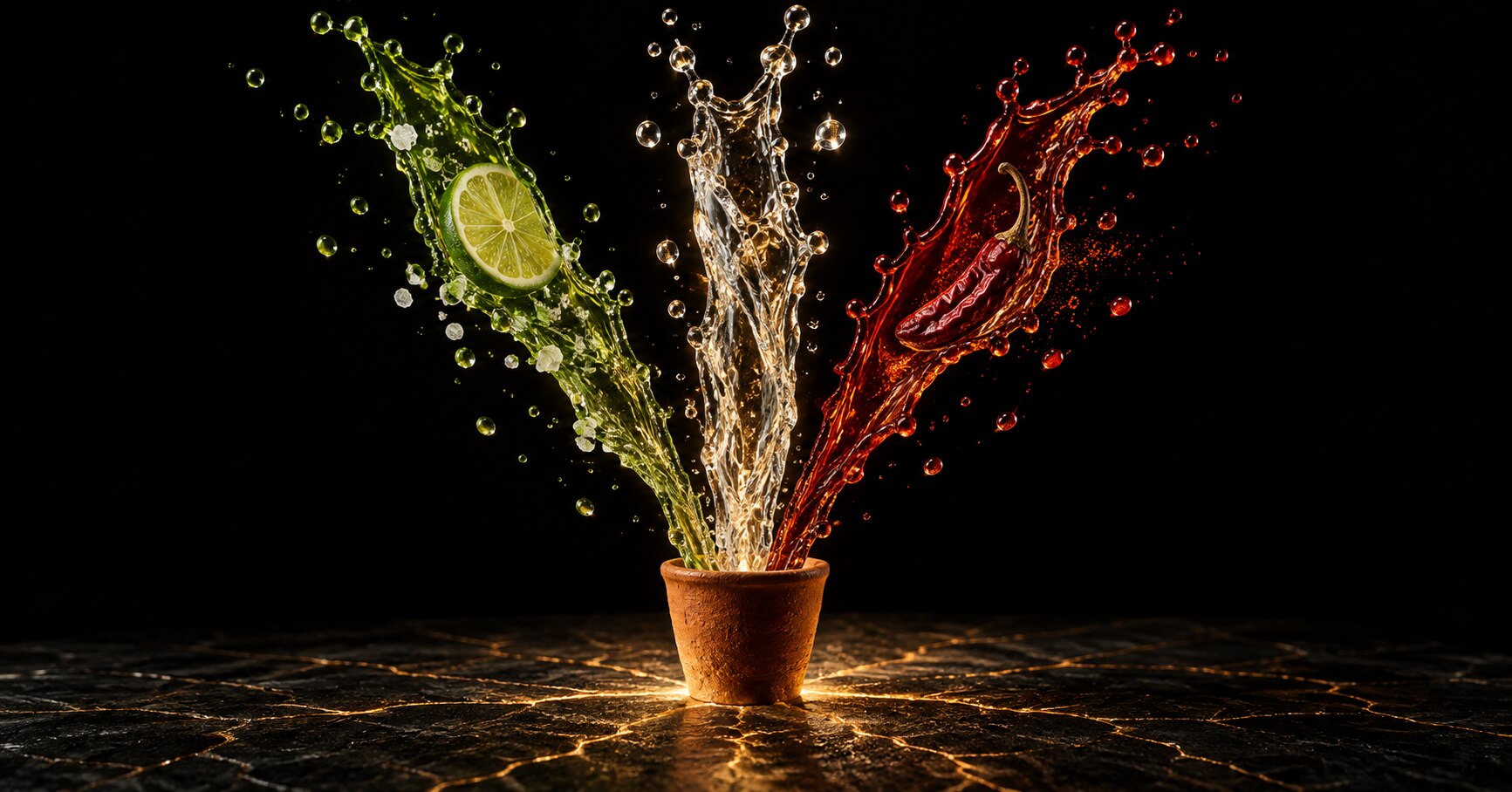
Salt and Lime Is Not a Tourist Trick. It's a Cocktail Taken Apart.
Senses & Ritual · Article 8 of 11
Mexico has been serving deconstructed cocktails for a hundred years and calling them something else. Three glasses in the colors of the flag, and every one of them has a job.
Green, white, red
Three caballitos arrive in a row. Lime juice. Tequila. Sangrita.
Green, white, red. It is the flag, so it is called a bandera — a banderita if the person serving it likes you.
Nothing gets mixed. You drink them in order, because that is the order the flag goes in.
Why the second glass tastes better than it should
Everyone already understands why lemon goes on fish, why salt goes on a tomato, why a bite of cheese changes the next sip of wine. Nobody eats the lemon on its own. It is there to point at the fish.
A bandera is that, with the food swapped for liquids. Pairing, but everything in the glass.
Take the lime. Acid, cold, sharp. Your mouth reorganizes around it. Now the tequila lands on a primed mouth that is not the one you had thirty seconds ago — louder, greener, more itself than it would have been alone. Then the sangrita, orange and chile and a little sweet, arrives into a mouth full of agave and does the same thing backwards. And then you want the lime again.
The lime is the lemon. The sangrita is the sauce. The spirit is the fish, and it should taste more like itself after each one, not less. The sequence is the ingredient.
Salt and lime is the same trick
Salt, spirit, lime. Three flavors, in an order, each one setting up the next.
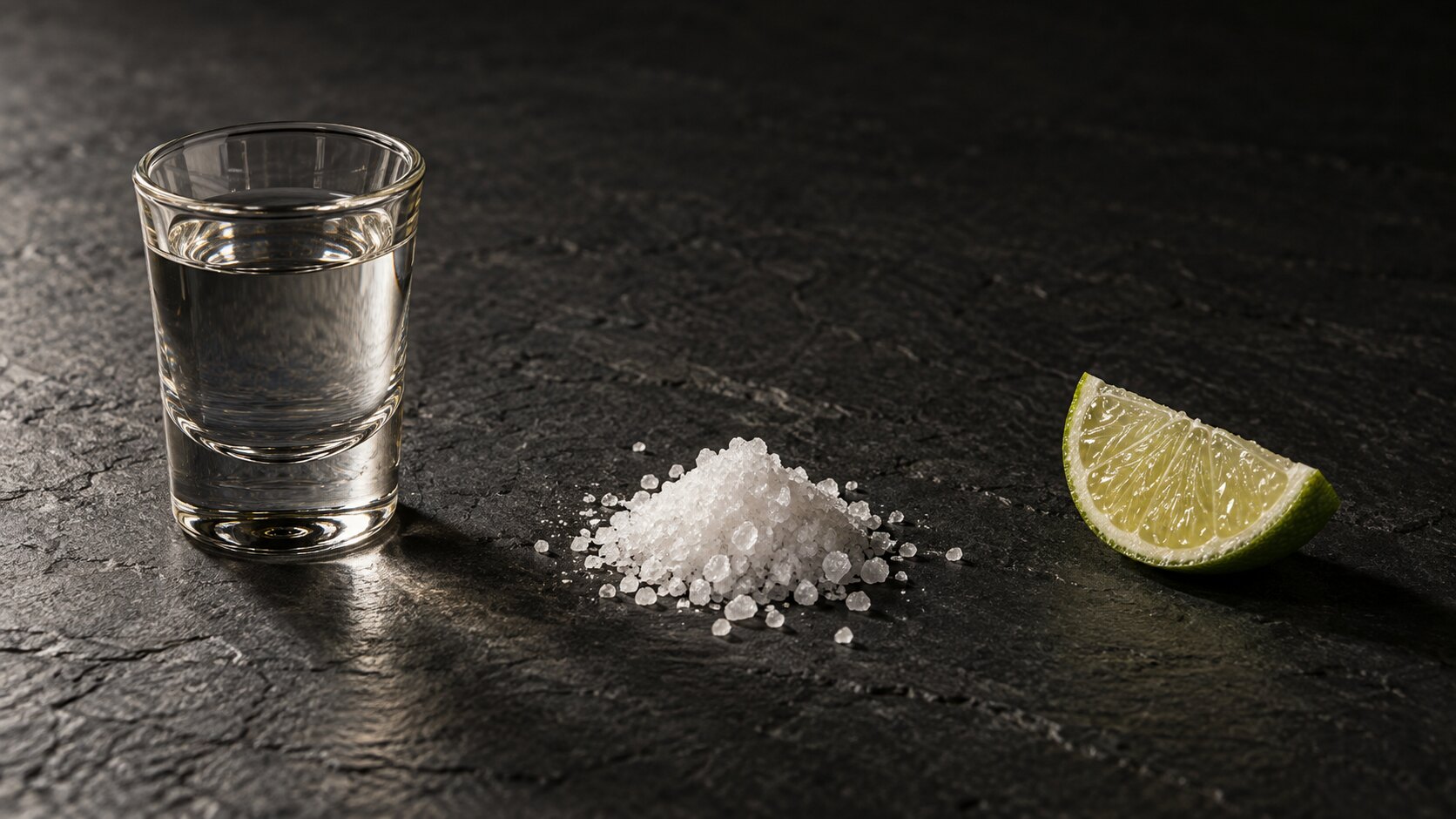
Somewhere it became the thing serious drinkers roll their eyes at. I get it. But the eye-roll is aimed at the wrong thing.
The problem was never the salt. The problem is that most people reaching for it are using it to not taste the tequila. Salt, throw it back, lime, done; and the agave never touched anything. That is a fine night, I have had it, I will have it again. But those three things are on the table to make you taste the spirit more, and they got repurposed into a way of not tasting it at all.
Not a tourist trick. A sipping sequence to master.
Oaxaca and Jalisco already have their versions
Mezcal comes with a slice of orange and a pile of sal de gusano; chile, salt, and a caterpillar that lived inside the agave, toasted and ground. The salt goes on the orange. The orange comes after the sip.
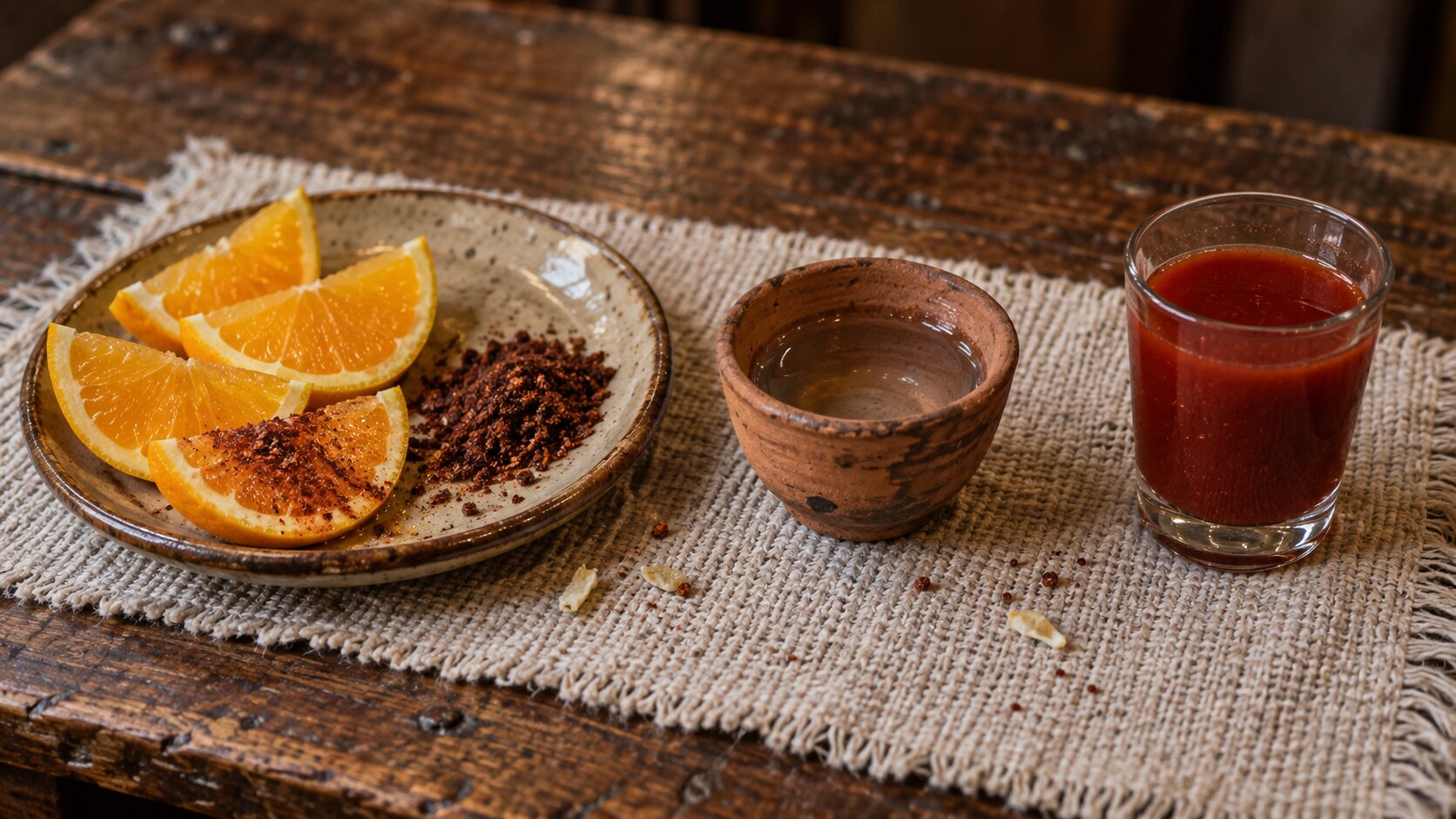
Sangrita comes out of Jalisco in the 1920s. Seville orange, lime, pomegranate, chile. The red is the chile, not tomato. And it never goes in the tequila. Its own glass, always.
So let's call them what they are
Cocktails. Taken apart and handed to you in pieces.
A mixologist puts lime, agave, salt, sugar and a bitter edge in one glass so they arrive together.
A cocktail is a chord. A bandera is an arpeggio. Same notes.

The world spent ten years learning to say deconstructed about food. Mexico got there first and never bothered with the word.
The chord is not the enemy
A cocktail is somebody's expertise made drinkable. The spirit was cast like an actor: a margarita on tequila and a margarita on mezcal are different drinks, and the person who chose knew exactly why. Grand Marnier behind a tequila does what Cointreau cannot. A mezcal negroni is not a substitution, it is a different argument about smoke and bitterness.
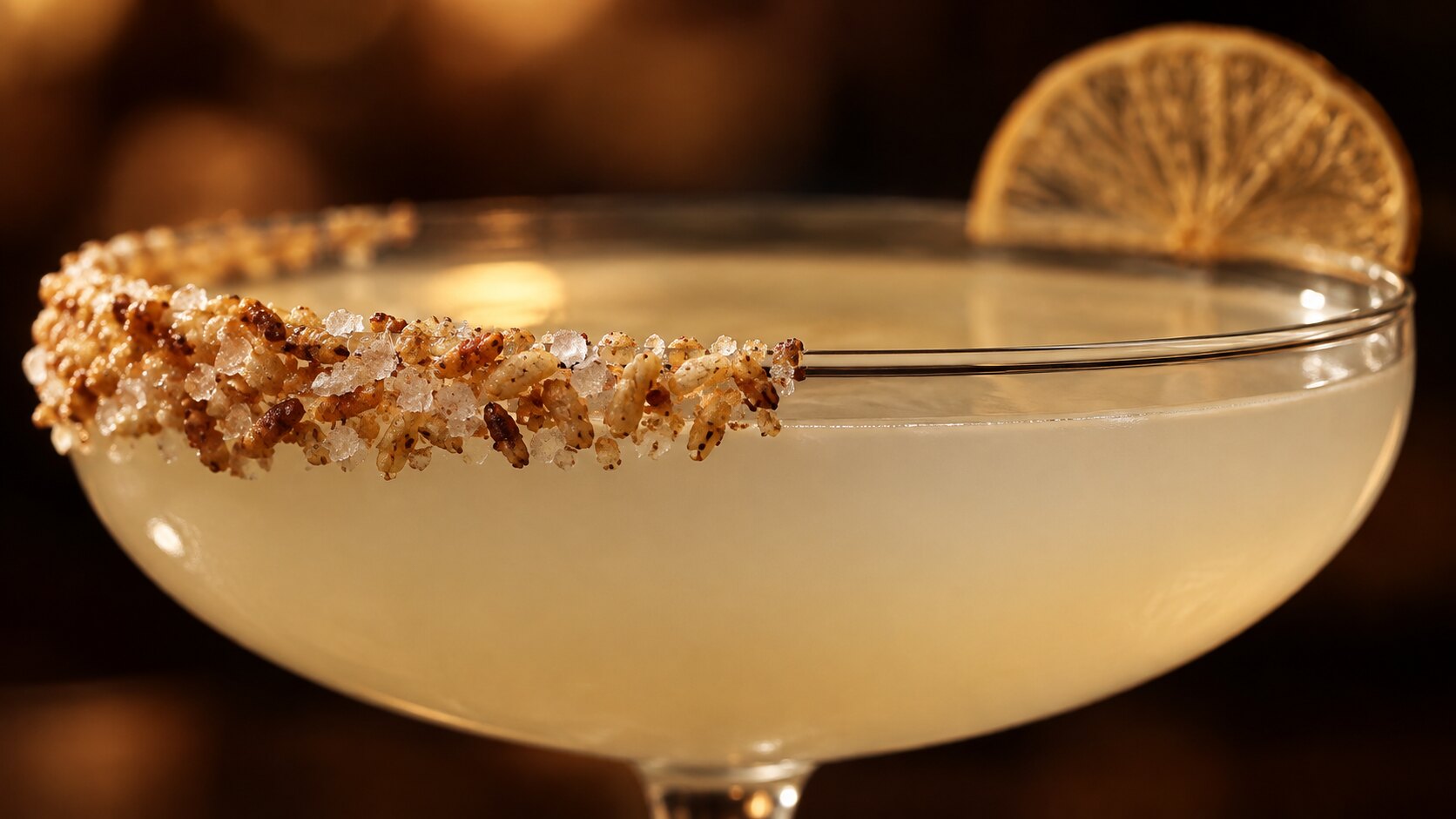
And look at the rim. Toasted rice with salt down one side. A slice placed where your hand will find it. That is not decoration — it is the pairing, served on the outside of the drink, meant to be taken separately: a lick, a bite, a sip. The mixologist plated the food course on the glass. A third of the people it is served to never touch it.
One rule, one exception
Sip the spirit first. Alone, before anything changes your mouth, so you know what it is. Everything after is contrast, and contrast against something you do not remember is just noise.
The exception is the bandera, which starts green because the flag starts green. The flag outranks me. As long as you swallow the lime juice before you take the tequila you should notice the effects of priming your tongue.
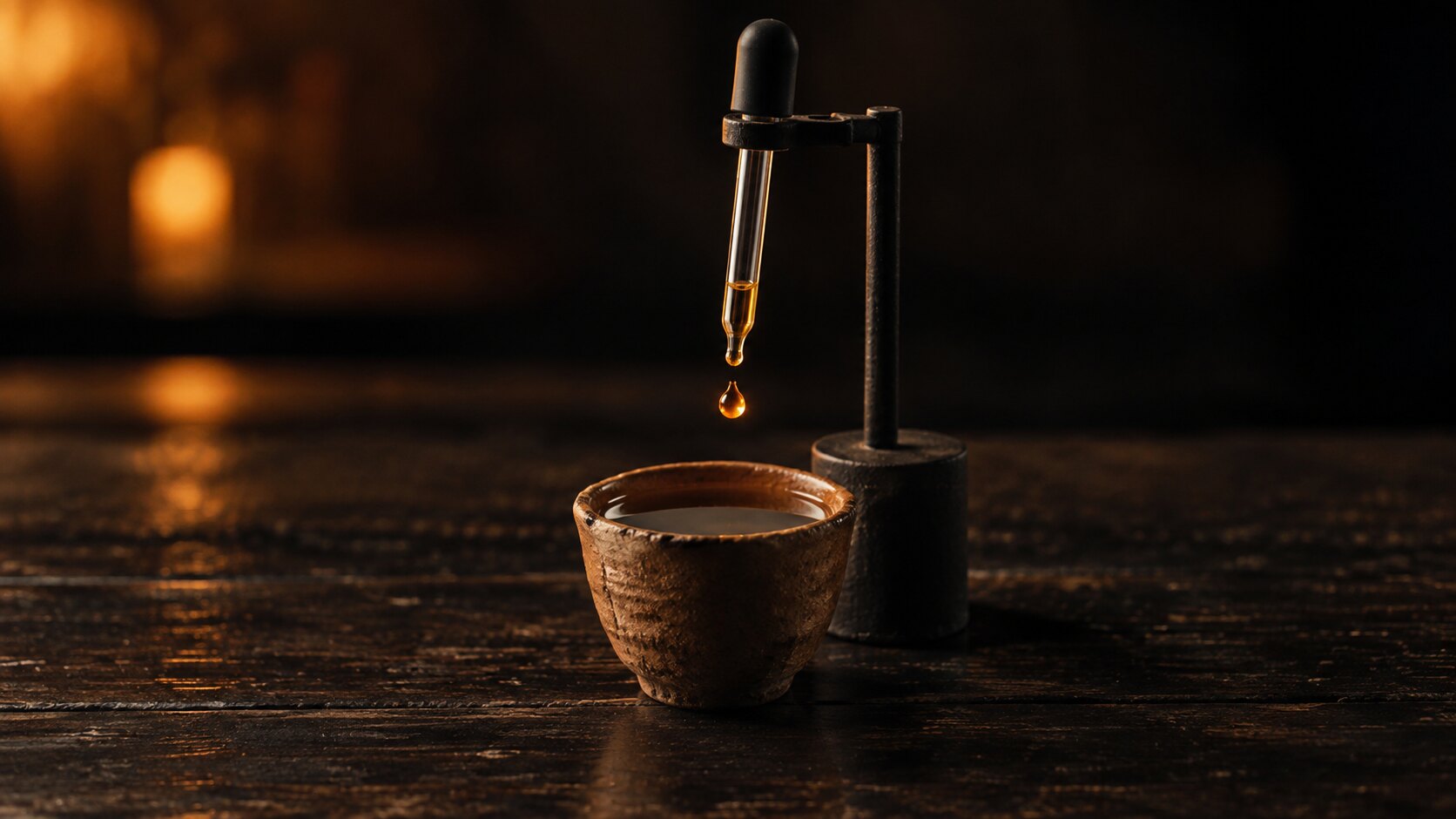
The dropper already exists. It holds water.
Here is what I have not seen anywhere in agave: a copita that arrives with a small dropper beside it. One drop of something bitter, or sweet, or sharp — chosen for that spirit, to point at one part of it.
I went looking. Nobody is doing it. But every piece of it exists somewhere else.
Royal Navy officers in the 1820s put a dash of bitters in their neat gin and called it pink gin. The bartender asked in or out? — the bitters were swirled around the empty glass, and you chose whether they stayed. A drop does not have to go in the liquid. It can go on the glass.
Whisky bars hand you a glass pipette for adding water a drop at a time. It is a whole product category now. It holds water, and nobody has ever put anything else in it.
In Martinique a ti' punch is served as a tray — rhum, cut limes, cane syrup — and you build your own. The saying is chacun prépare sa propre mort. Each one prepares their own death.
Gin has it. Whisky has it. Rum has it. Agave has every one of the parts and none of the assembly.
Build your own flag
Pair it the way you would pair a plate. Something acidic, something salty, something with heat — in separate glasses, chosen for the bottle in front of you. Spirit first, unless you are doing the flag. Go back and forth and pay attention to the moment one thing lands on top of another. Start with The Tasting Ritual if you want the tasting sequence first.
When a combination makes a bottle stand up straighter, write it down. The order, the proportion, what it did. In four months you will remember it worked and not what it was.
And do not be surprised if, soon, a copita of agave arrives at your table with a small dropper next to it.
Do not be surprised if it starts here.
· · ·
References
- Sal de gusano: composition, Oaxacan origin and the orange-after-the-sip service. Mezcal Pro, “Worm salt (sal de gusano) — what it is & how to use it.”
- Sangrita: Jalisco, 1920s, Lake Chapala composition, served in a separate glass and sipped alternately. Wikipedia, “Sangrita.”
- Pink gin: Royal Navy origin, Siegert’s Angostura bitters (1824), “in or out.” PUNCH, “Created and Forgotten at Sea: Pink Gin.”
- Whisky water droppers as a product category. Whisky Advocate, “Be Precise With One of These Sleek Water Droppers.”
- Ti’ punch served deconstructed; chacun prépare sa propre mort. Ben Jones, Rhum Clément, quoted in Rum Dood, “’Ti Punch” (2011).
Choose your Moment and discover Your Pour.
Find Your Pour →A note on language. Proper nouns keep their names in every language: spirits, agave varietals, brands, and the people who make them.